Showing posts with label CO poisoning. Show all posts

Friday, 13 July 2018

Carbon Monoxide alarms - questions and answers

IMPORTANT NOTE:
The instructions that come with your CO alarm should always be read and followed. The advice given here is general advice.

Question 1. 
Do you put CO alarms high or low?

Answer
CO is slightly lighter than air and  has a tendency to rise to the highest points in a room. Therefore CO alarms should ideally be placed high up on a wall (above the height of a window or door). CO alarms can be fitted on the ceiling and usually need to be at least 300mm from the wall. 

Question 2.
Should I have my CO alarm next to my gas appliance?

Answer
Ideally your CO alarm should be between 1 and 3 meters horizontally away from your appliance.

Question 3.
How many CO alarms should I have?

Answer
Ideally you need a CO alarm in every room that has a fuel burning appliance. Also rooms where you spend lots of time. Having a CO alarm in bedrooms or near to where everyone sleeps is also highly recommended as this is when we are most vulnerable.

Question 4.
Are there any locations that I should avoid placing my CO alarm?

Answer
Yes. Avoid placing your CO alarm:
  • in enclosed spaces such as in a cupboard or behind curtains
  • where it can be obstructed such as behind furniture
  • above a sink or close to a cooking appliance
  • next to a door or a window or a vent
  • next to an extractor fan
  • where there may be extremes of temperature
  • in an dirty or dusty areas 
  • in a damp or humid location such as a bathroom
  • right next to your fuel burning appliance (less than 1 meter).
other advice:
If your alarm does sound then don't think it is just a false alarm and ignore it. Remember: CO is invisible and not easily detected (which is why it is often called the silent killer).
Make sure you test your CO alarm on a regular basis (usually by pressing the test button).

REMEMBER: when installing a CO alarm always thoroughly read, understand and follow the manufacturers instructions.

Tuesday, 10 July 2018

How just £15 could save your life.


Would you spend £15 to protect you and your family in your own home? I'm guessing that most people would answer 'yes' to this question. Yet, I am amazed at how few people have a carbon monoxide alarm fitted in their home. When I service or repair a customer's gas appliance I usually ask them if they have a CO alarm fitted. More often than not the answer is 'no'. Some say they were 'thinking of getting one but just haven't got round to it.'. I have even had customers who are totally unaware of the risks of CO poisoning.

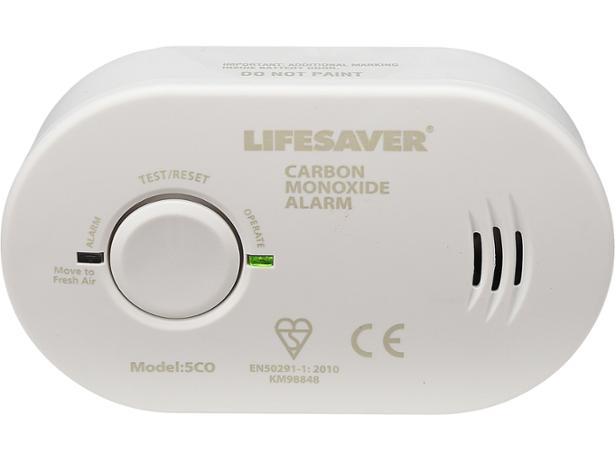
Image result for carbon monoxide alarm
a typical CO alarm
Avoidable deaths
The Office for National Statistics says that over 50 people die each year from CO poisoning, and around 4000 are treated in hospital. Yet it is estimated that 27 million in the UK don't have a CO alarm fitted.

CO alarms are a second line of defence
It is important to note that CO alarms are a good second line of defence. CO alarms only alert you when something is already wrong (i.e. a fault with your gas appliance).

Your first line of defence should always be to keep your gas appliances regularly serviced (at least once a year) by a Gas Safe engineer.

Awareness is key to saving lives and reducing deaths and incidents of CO poisoning. It is important that people are aware of the symptoms (refer to my previous Blog) and tell tale signs (refer to my previous Blog).

I always recommend getting a CO alarm to my customers and am happy to supply them with one.
Protect yourself and your family by following the ABC checklist:

  • A - ALARM (do you have one fitted?)
  • B - BATTERIES (have you tested it and are the batteries working?)
  • C - CHECK (have you had an up to date gas check?)
At the end of the day it is about peace of mind, and £15 is not a high price to pay for that!

Get your gas appliances serviced by giving me a call today. And why not ask about getting a CO alarm fitted at the same time. 


Find out more about carbon monoxide by visiting www.co-bealarmed.co.uk/  or the Gas Safe website

Wednesday, 4 July 2018

Are you suffering from the effects of Carbon Monoxide?

Unsafe gas appliances can produce a highly poisonous gas called carbon monoxide (CO). It can cause death as well as serious long term health problems such as brain damage.

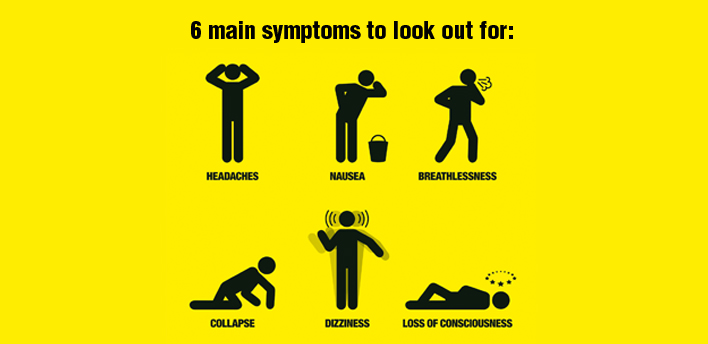
What are the symptoms of CO poisoning?

CO symptoms are similar to those of flu, food poisoning, viral infections and fatigue. That’s why it’s quite common for people to mistake this very dangerous poisoning for something else.

Other signs that could point to CO poisoning:

  • Your symptoms only occur when you are at home and seem to disappear when you leave home.
  • Others in your household (including pets) are experiencing similar symptoms and they appear at a similar time. 


What to do if you suspect CO poisoning

  • Get fresh air immediately. Open doors and windows, turn off gas appliances and leave the house.
  • See your doctor immediately or go to hospital - let them know that you suspect CO poisoning. They can do a blood or breath test to check. 
  • If you think there is an immediate danger, call the Gas Emergency Helpline on 0800 111 999.
  • Ask a Gas Safe registered engineer to inspect your gas appliances to see if there is a dangerous problem.